SortSmart
SortSmart
SortSmart
A specialized retail productivity tool designed to optimize inventory sorting efficiency and accuracy within high-volume apparel environments
A specialized retail productivity tool designed to optimize inventory sorting efficiency and accuracy within high-volume apparel environments
Project Overview
I identified a critical bottleneck in the fitting room replenishment workflow, specifically regarding the sorting and re-hanging of returned apparel. To resolve this, I developed SortSmart, a data-driven tool that cross-references garment article numbers with their precise floor locations. By implementing this system, I reduced sorting time per stand from 50 minutes to approximately 30 minutes—a 30–40% increase in operational efficiency. This optimization projects an annual saving of 828 labour hours, effectively reclaiming the capacity of half a full-time employee.
I identified a critical bottleneck in the fitting room replenishment workflow, specifically regarding the sorting and re-hanging of returned apparel. To resolve this, I developed SortSmart, a data-driven tool that cross-references garment article numbers with their precise floor locations. By implementing this system, I reduced sorting time per stand from 50 minutes to approximately 30 minutes—a 30–40% increase in operational efficiency. This optimization projects an annual saving of 828 labour hours, effectively reclaiming the capacity of half a full-time employee.
Current Process
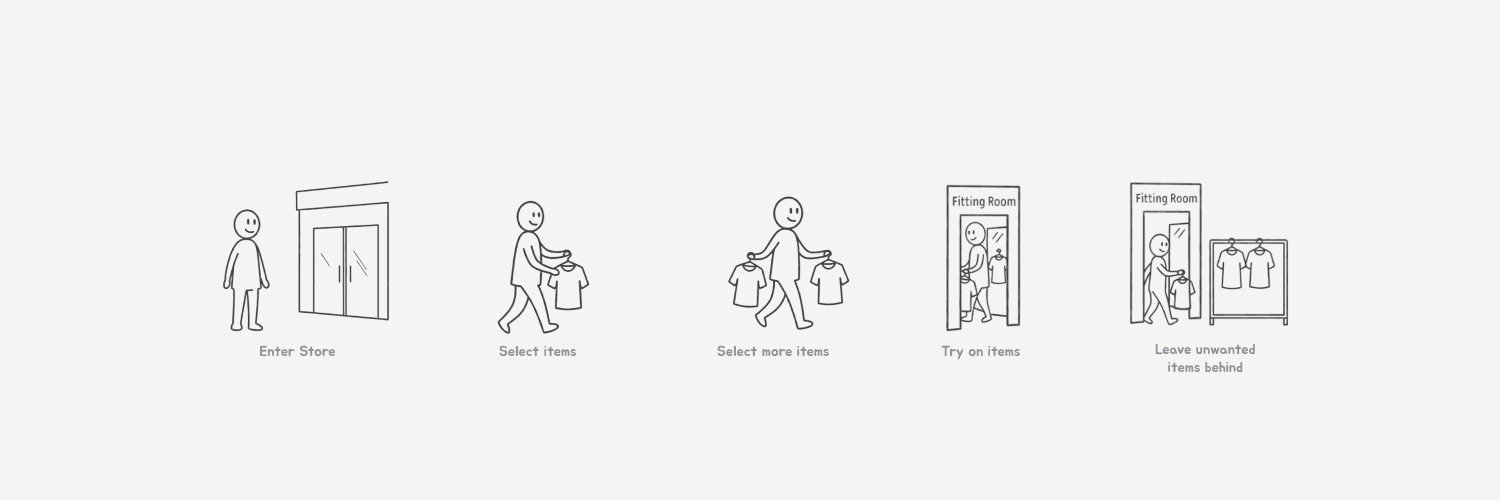
What happens to all those clothes you try on and leave in the fitting room?
What happens to all those clothes you try on and leave in the fitting room?
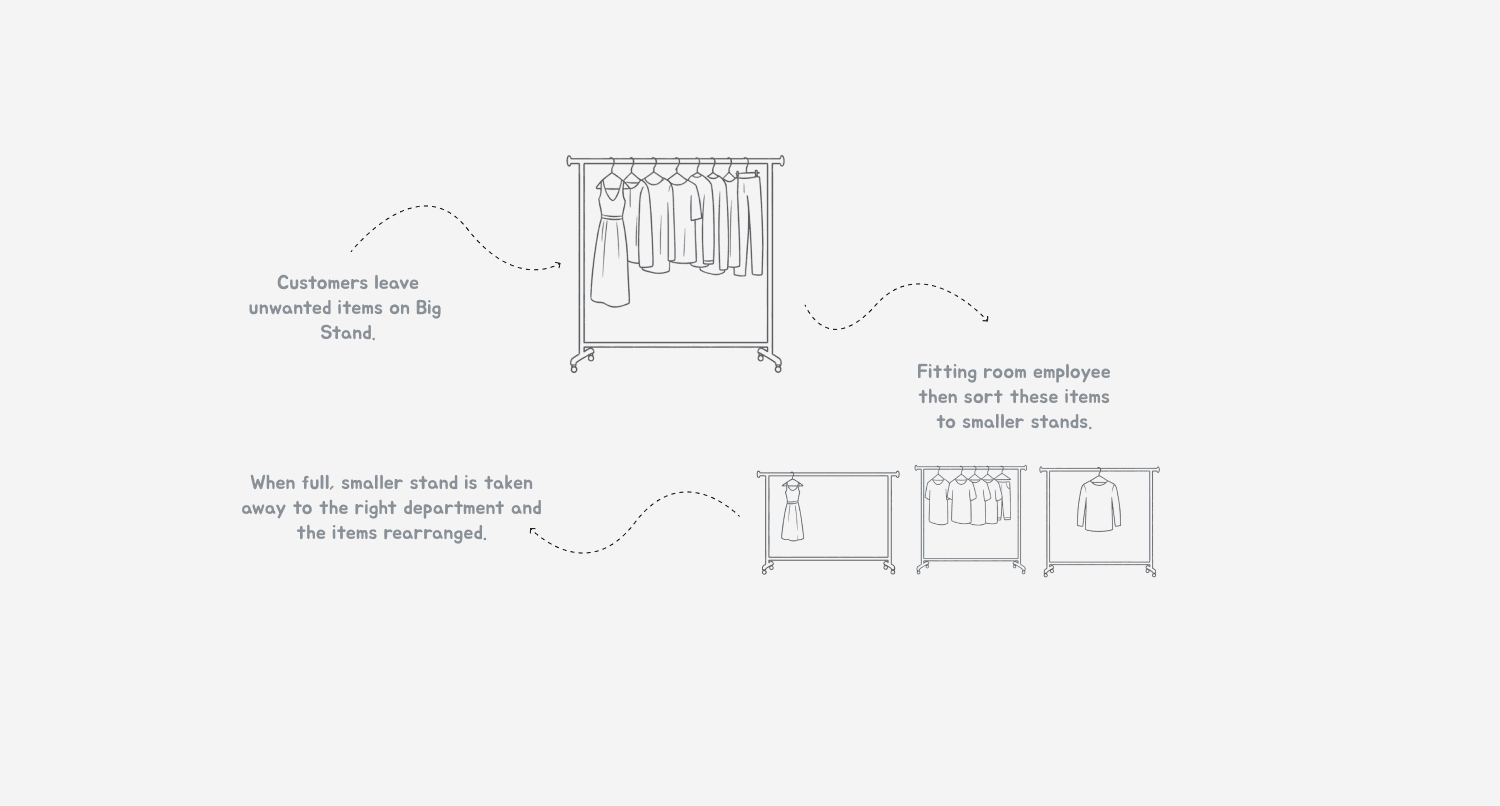
The standard workflow for fitting room returns involves collecting discarded apparel on centralized stands for manual redistribution. This process is the primary bridge between the fitting room and the sales floor; an employee must sort these items by department and return them to their precise locations to ensure inventory remains available for customers. In a stable environment, this task is estimated to take approximately 30 minutes per stand, serving as a routine component of daily floor maintenance.
The standard workflow for fitting room returns involves collecting discarded apparel on centralized stands for manual redistribution. This process is the primary bridge between the fitting room and the sales floor; an employee must sort these items by department and return them to their precise locations to ensure inventory remains available for customers. In a stable environment, this task is estimated to take approximately 30 minutes per stand, serving as a routine component of daily floor maintenance.
Problem
While the return process appears straightforward, it was undermined by operational volatility and information decay. Frequent store reconfigurations by the Visuals Team meant that floor layouts shifted almost daily, creating a significant knowledge gap for part-time staff whose understanding of product locations became obsolete between shifts.
While the return process appears straightforward, it was undermined by operational volatility and information decay. Frequent store reconfigurations by the Visuals Team meant that floor layouts shifted almost daily, creating a significant knowledge gap for part-time staff whose understanding of product locations became obsolete between shifts.
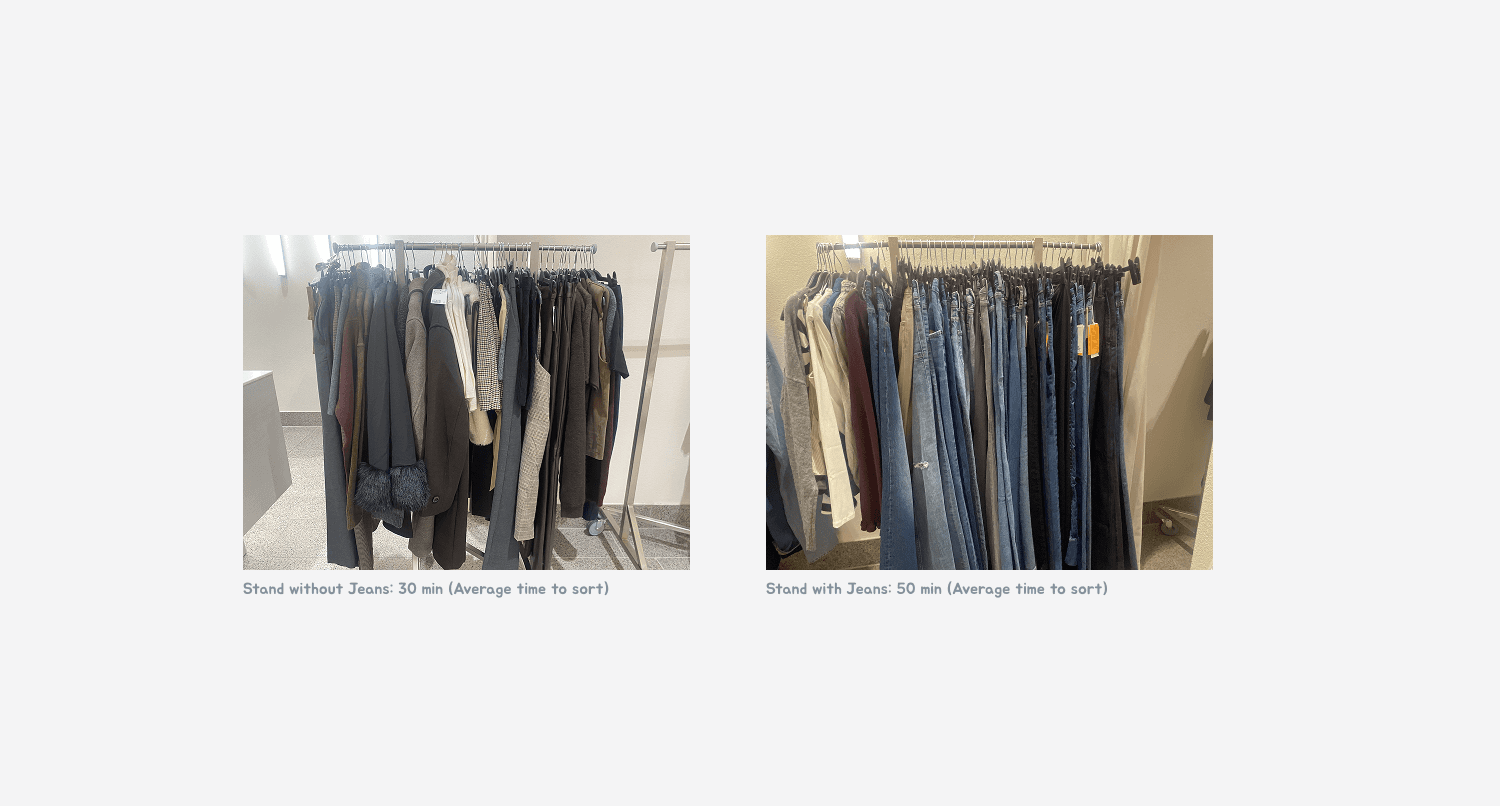
This issue was most acute in the denim department, where extreme visual similarity between styles masked the fact that they belonged to entirely different sections of the store. Without a centralized "source of truth" for item locations, these compounding factors drove the average sorting time from 30 to 50 minutes per stand—a systemic inefficiency resulting in a loss of 828 labour hours annually.
This issue was most acute in the denim department, where extreme visual similarity between styles masked the fact that they belonged to entirely different sections of the store. Without a centralized "source of truth" for item locations, these compounding factors drove the average sorting time from 30 to 50 minutes per stand—a systemic inefficiency resulting in a loss of 828 labour hours annually.
The Solution: Developing SortSmart
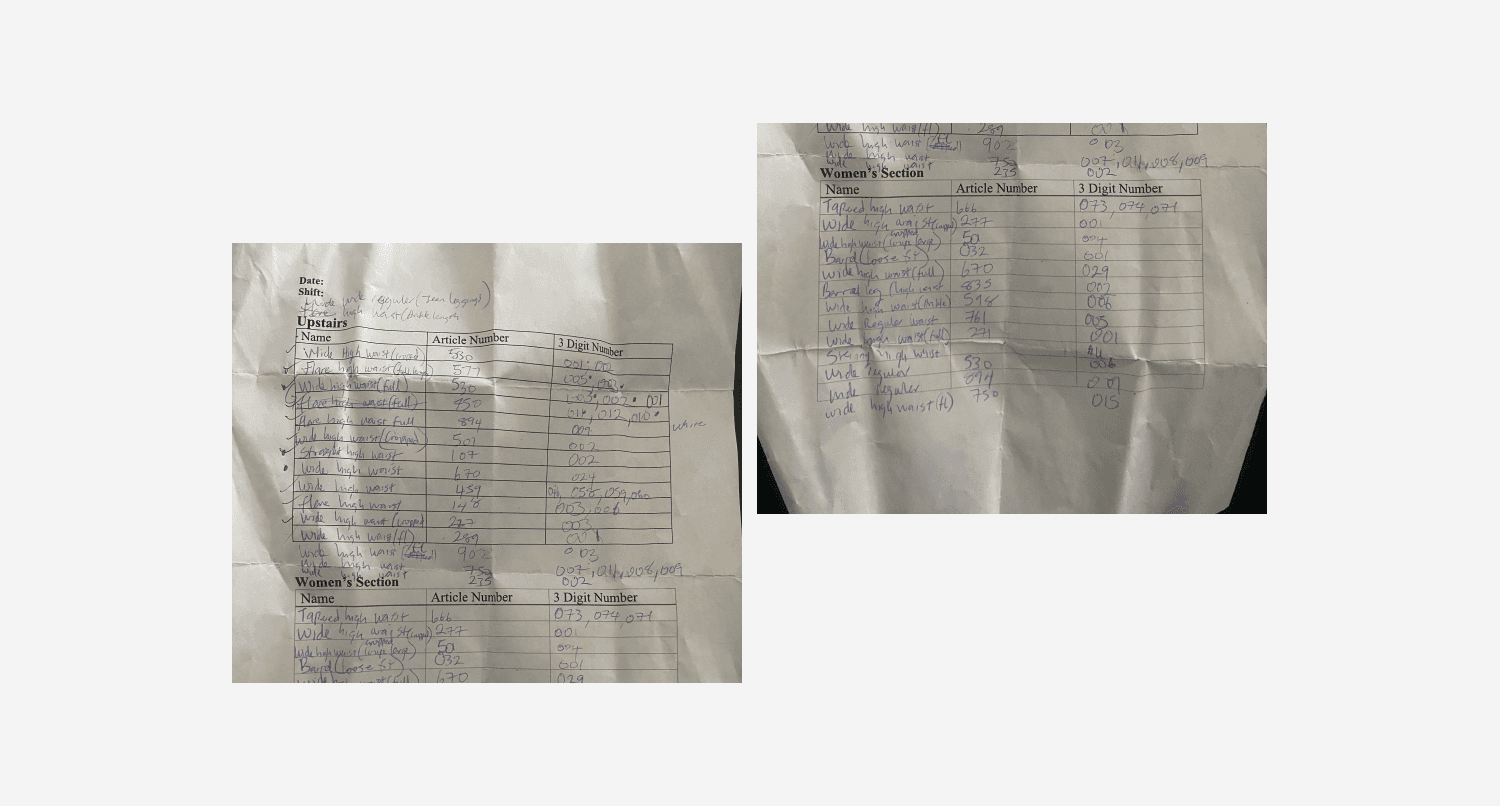
What began as a personal effort to streamline my own workflow evolved into a data-driven tool for the entire department. Recognizing that the primary barrier to efficiency was a lack of accessible information, I took the initiative to map the store’s inventory manually. Before a scheduled fitting room shift, I conducted a floor audit, recording the unique article numbers of every denim style and cross-referencing them with their designated department.
What began as a personal effort to streamline my own workflow evolved into a data-driven tool for the entire department. Recognizing that the primary barrier to efficiency was a lack of accessible information, I took the initiative to map the store’s inventory manually. Before a scheduled fitting room shift, I conducted a floor audit, recording the unique article numbers of every denim style and cross-referencing them with their designated department.
This comprehensive list became the foundation of SortSmart. By utilizing this centralized "source of truth" to bypass the visual ambiguity of the products, I was able to immediately restore sorting efficiency. My initial testing proved that with the right data at hand, sorting time dropped from the 50-minute average back to the 30-minute benchmark—a 40% reduction in time-to-task during the pilot phase.
This comprehensive list became the foundation of SortSmart. By utilizing this centralized "source of truth" to bypass the visual ambiguity of the products, I was able to immediately restore sorting efficiency. My initial testing proved that with the right data at hand, sorting time dropped from the 50-minute average back to the 30-minute benchmark—a 40% reduction in time-to-task during the pilot phase.
Iterating for Scalability
While the initial sorting list provided immediate relief, it eventually encountered significant adoption challenges regarding its long-term scalability and accuracy. My part-time capacity limited my ability to effectively socialize the tool and provide the necessary training to all colleagues, while the Visuals Team’s frequent store reconfigurations caused the static data to become obsolete as item locations shifted. These factors revealed that a manual list lacked the adaptability required to keep pace with the store’s dynamic operational environment, highlighting the urgent need for a more responsive, digital solution.
While the initial sorting list provided immediate relief, it eventually encountered significant adoption challenges regarding its long-term scalability and accuracy. My part-time capacity limited my ability to effectively socialize the tool and provide the necessary training to all colleagues, while the Visuals Team’s frequent store reconfigurations caused the static data to become obsolete as item locations shifted. These factors revealed that a manual list lacked the adaptability required to keep pace with the store’s dynamic operational environment, highlighting the urgent need for a more responsive, digital solution.
Strategic Design Decision
Platform Selection
I opted for a mobile-first application to leverage the existing technological habits of the retail team. Employees are already accustomed to using handheld devices for stock checks and customer service, ensuring the interface would feel instantly familiar and require minimal training. Furthermore, I designed for the physical reality of the store floor: retail work is inherently a high-multitasking environment where staff are often carrying apparel in one hand. A mobile device allows for a natural, one-handed workflow that integrates seamlessly into the movement of a busy shift.
I opted for a mobile-first application to leverage the existing technological habits of the retail team. Employees are already accustomed to using handheld devices for stock checks and customer service, ensuring the interface would feel instantly familiar and require minimal training. Furthermore, I designed for the physical reality of the store floor: retail work is inherently a high-multitasking environment where staff are often carrying apparel in one hand. A mobile device allows for a natural, one-handed workflow that integrates seamlessly into the movement of a busy shift.

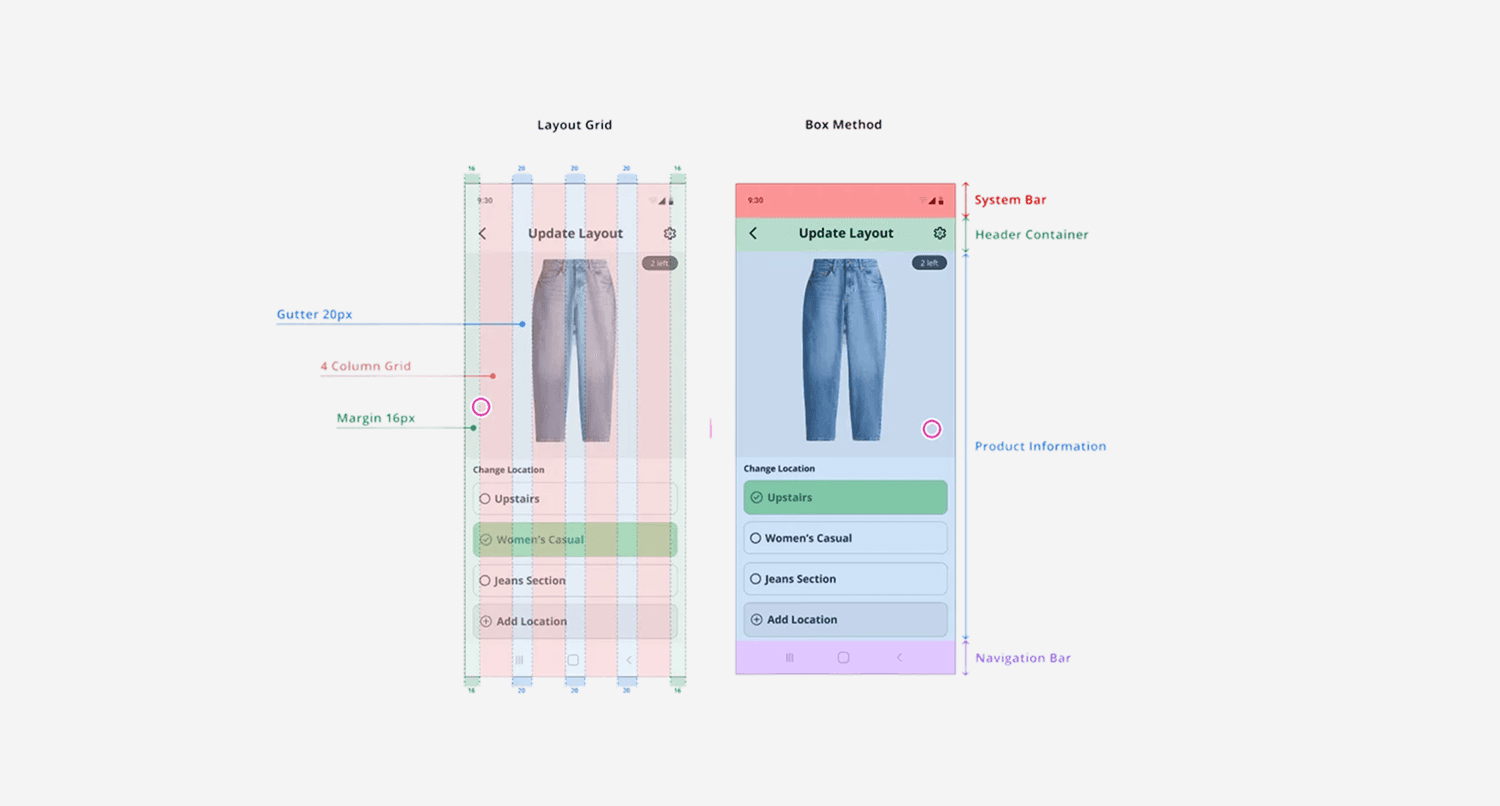
Spacing
I implemented a modular spacing system derived from the CSS box model to ensure structural consistency and visual rhythm across the application. By maintaining a clean, predictable layout, I optimized the interface for high-speed scannability—a critical requirement for users who are constantly in motion.
I implemented a modular spacing system derived from the CSS box model to ensure structural consistency and visual rhythm across the application. By maintaining a clean, predictable layout, I optimized the interface for high-speed scannability—a critical requirement for users who are constantly in motion.
User flow
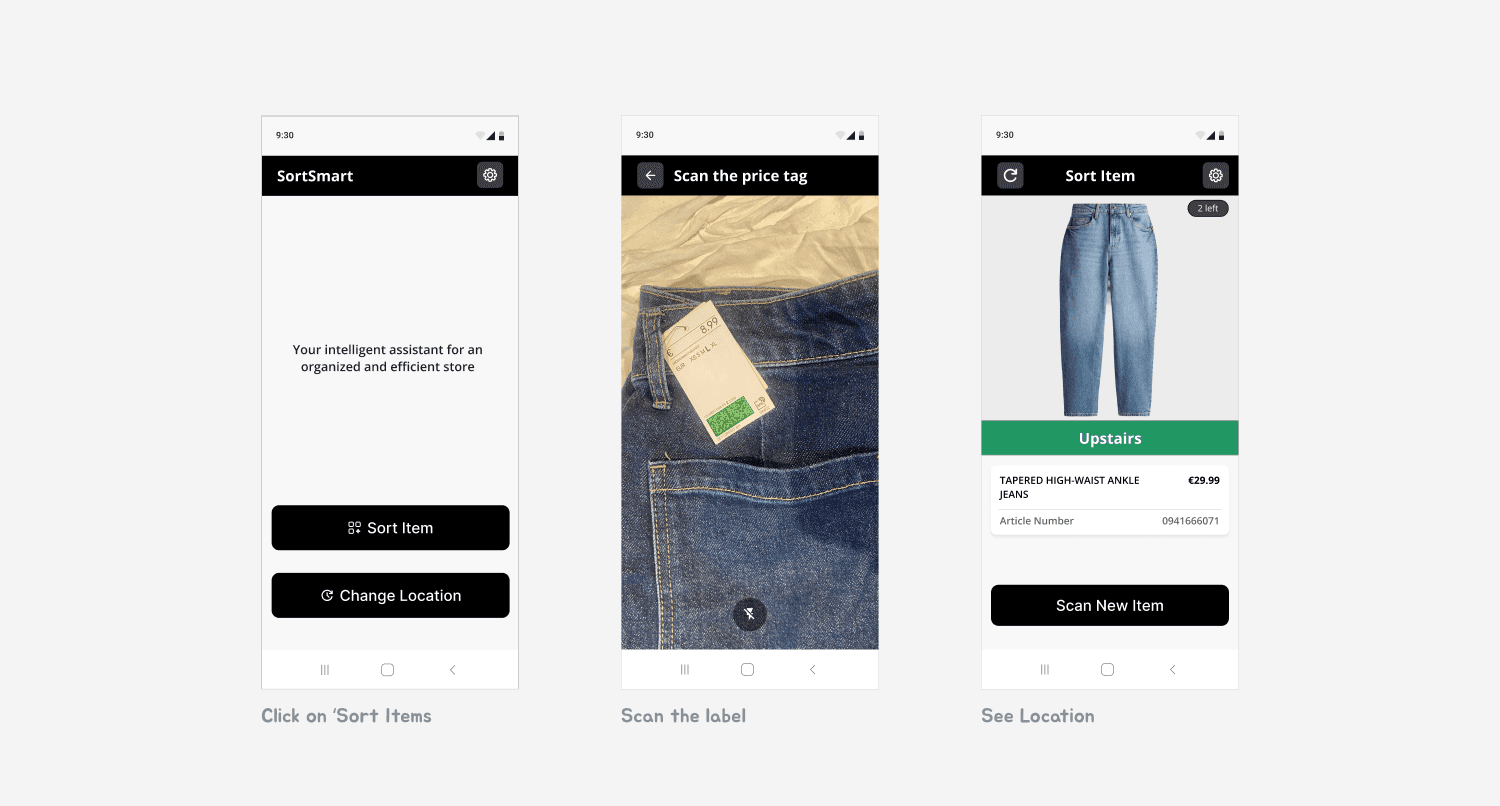
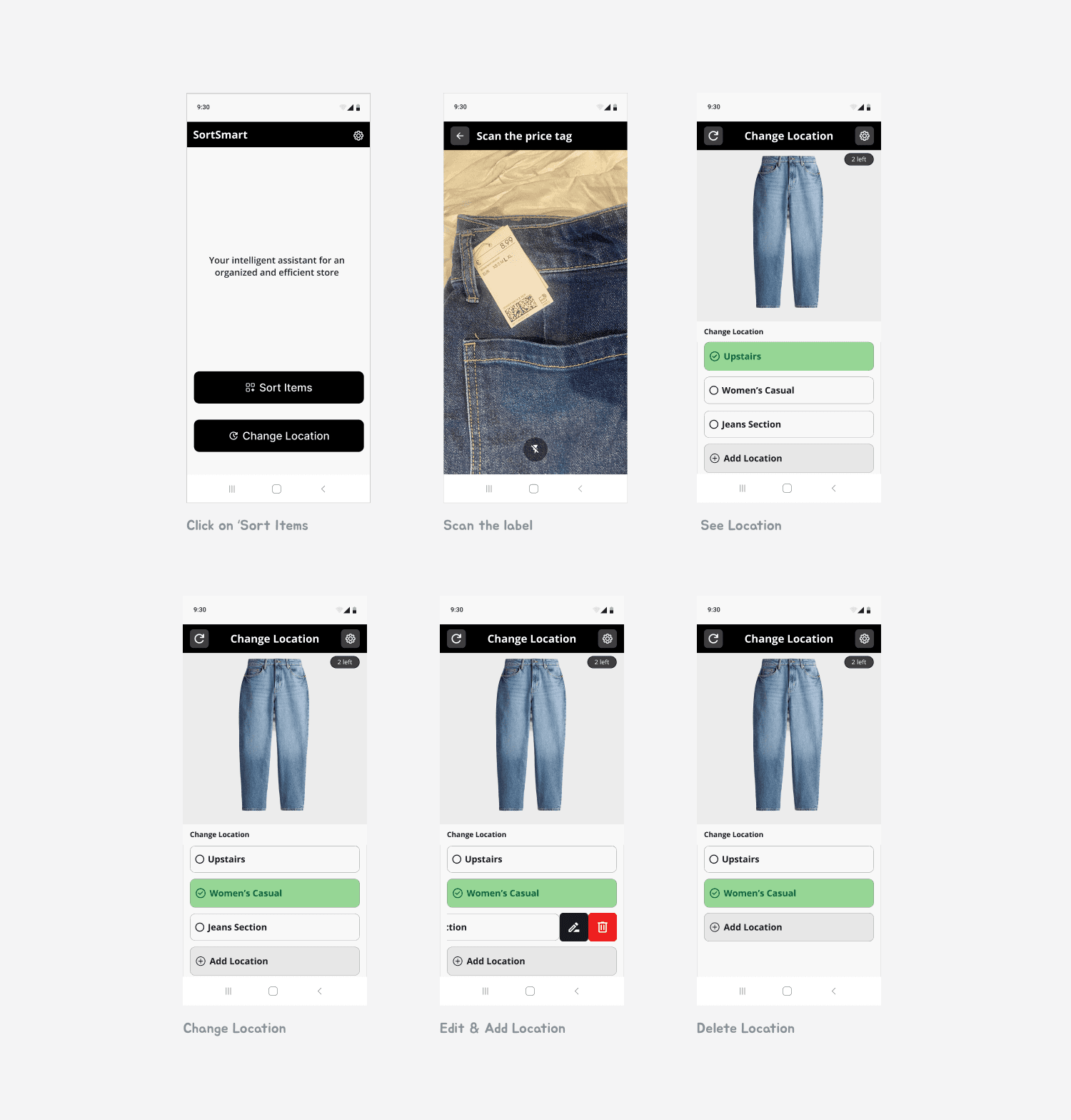
SortSmart offers two primary user flows, each designed with specific roles in mind:
SortSmart offers two primary user flows, each designed with specific roles in mind:
Sort Item:Tailored primarily for fitting room staff and floor associates, this flow optimizes the retrieval of departmental locations.
Sort Item:Tailored primarily for fitting room staff and floor associates, this flow optimizes the retrieval of departmental locations.
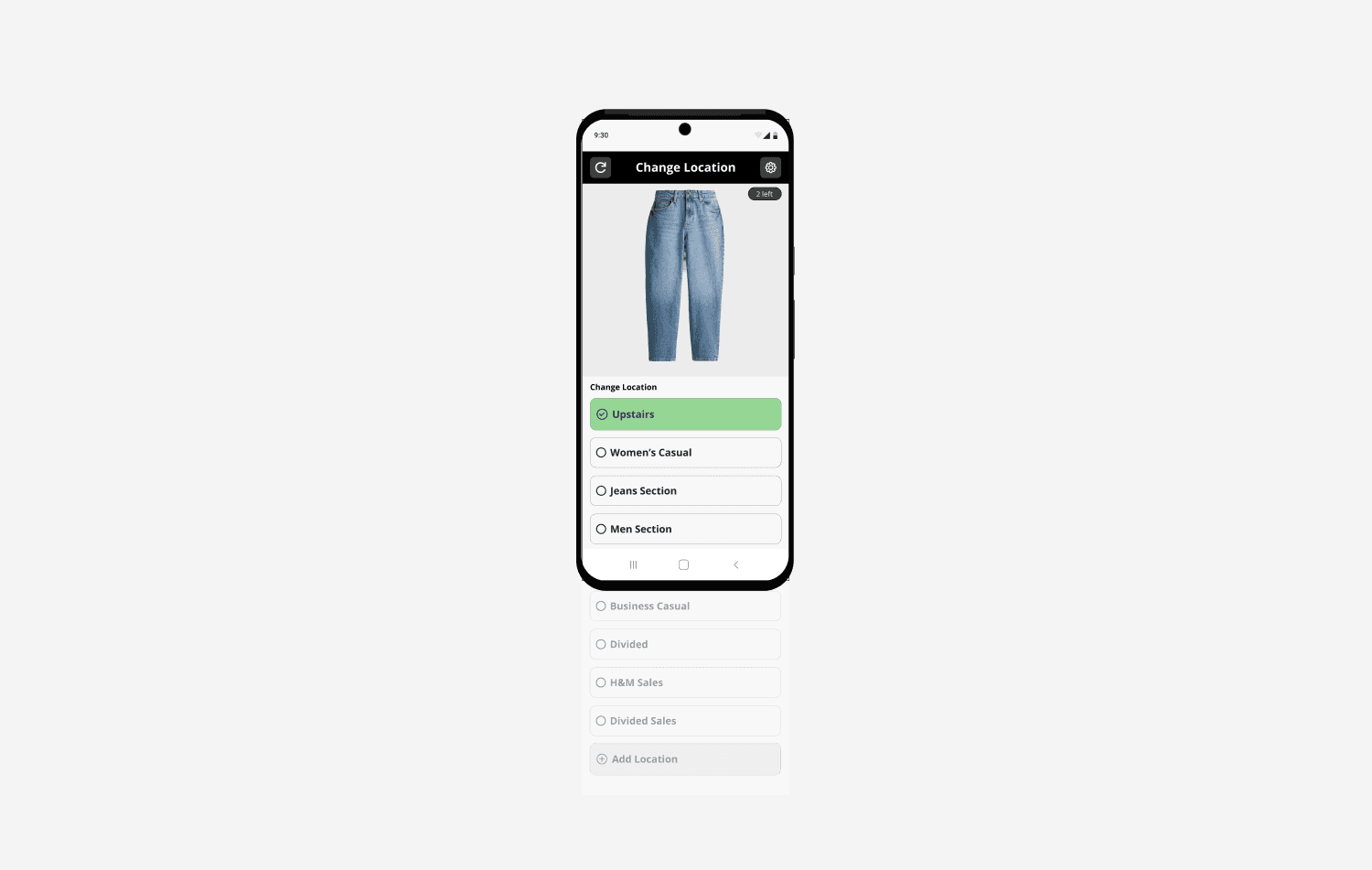
Change Location: Tailored for the Visual Merchandising team, this administrative flow provides the agility needed to maintain data integrity. It allows for the real-time editing, deletion, or relocation of inventory data, ensuring the "source of truth" adapts instantly as store layouts evolve.
Change Location: Tailored for the Visual Merchandising team, this administrative flow provides the agility needed to maintain data integrity. It allows for the real-time editing, deletion, or relocation of inventory data, ensuring the "source of truth" adapts instantly as store layouts evolve.
Customization
With a footprint of over 400 locations in Germany and more than 4,000 globally, the application was engineered to accommodate the high degree of variance in store layouts. Flexibility was a foundational requirement; therefore, SortSmart was designed as a modular framework capable of adapting to diverse floor plans and varying operational scales. This ensures that regardless of a specific store’s size or geographic location, the tool remains a viable, adaptable solution for local inventory management.
With a footprint of over 400 locations in Germany and more than 4,000 globally, the application was engineered to accommodate the high degree of variance in store layouts. Flexibility was a foundational requirement; therefore, SortSmart was designed as a modular framework capable of adapting to diverse floor plans and varying operational scales. This ensures that regardless of a specific store’s size or geographic location, the tool remains a viable, adaptable solution for local inventory management.
Strategic Adaptability
Strategic Adaptability
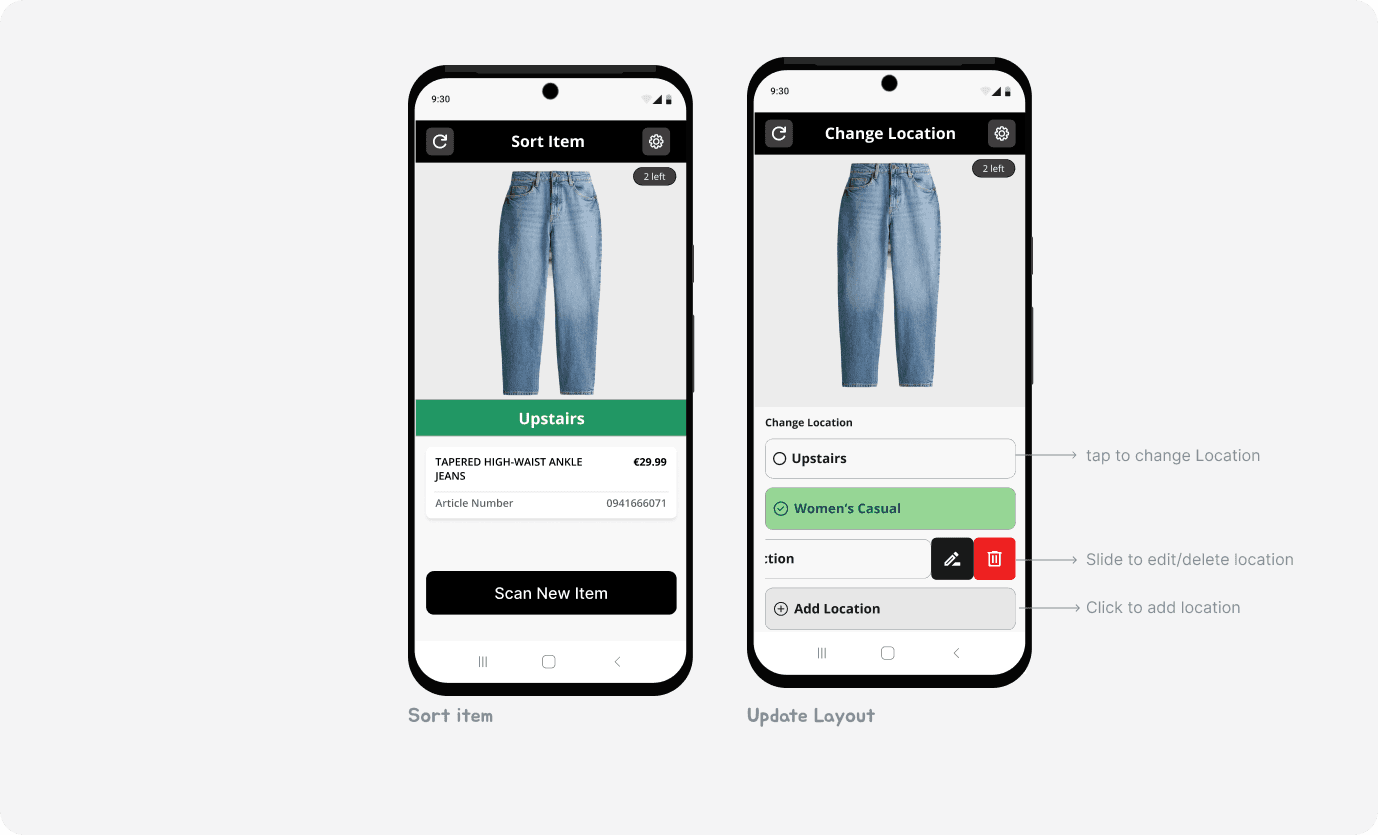
The interface was engineered to handle complex data sets without compromising usability. For example, in larger flagship stores with extensive departmental structures, the layout utilizes a vertical scroll architecture. This ensures that even when a high volume of location data is present, the information remains accessible and legible without crowding the screen or overwhelming the user.
The interface was engineered to handle complex data sets without compromising usability. For example, in larger flagship stores with extensive departmental structures, the layout utilizes a vertical scroll architecture. This ensures that even when a high volume of location data is present, the information remains accessible and legible without crowding the screen or overwhelming the user.
Lessons Learned
Prioritizing Utility over Aesthetics
Prioritizing Utility over Aesthetics
Working on SortSmart reinforced that designing for employees requires a fundamentally different approach than designing for consumers. In a high-pressure retail environment, speed, clarity, and reliability are the primary metrics of success. I learned to prioritize functional efficiency over decorative visuals or animations to ensure the tool remained an asset, not a distraction.
Working on SortSmart reinforced that designing for employees requires a fundamentally different approach than designing for consumers. In a high-pressure retail environment, speed, clarity, and reliability are the primary metrics of success. I learned to prioritize functional efficiency over decorative visuals or animations to ensure the tool remained an asset, not a distraction.
The Necessity of Advocacy
The Necessity of Advocacy
This project highlighted that a great solution is only effective if it is adopted. As a part-time employee, I faced significant challenges in socializing the tool and training a rotating staff. I learned that proactive communication and a structured dissemination plan are just as critical to a project’s success as the design itself.
This project highlighted that a great solution is only effective if it is adopted. As a part-time employee, I faced significant challenges in socializing the tool and training a rotating staff. I learned that proactive communication and a structured dissemination plan are just as critical to a project’s success as the design itself.
Currently available for full-time roles. Let's connect and discuss how I can contribute to your team.
Sarafinny04@gmail.com
Designed by me in Framer.
Copyright
2026 Sarah Igbinosa.